
Order produce in season
Western Cape growers · delivery in Cape Town · pay by invoice or cash on delivery
Browse the listBerries and vegetables that support your eyes
A food-focused blog about the produce that helps maintain eye wellness — nutrients on the plate, not on a label.
Why eye nutrition starts with produce
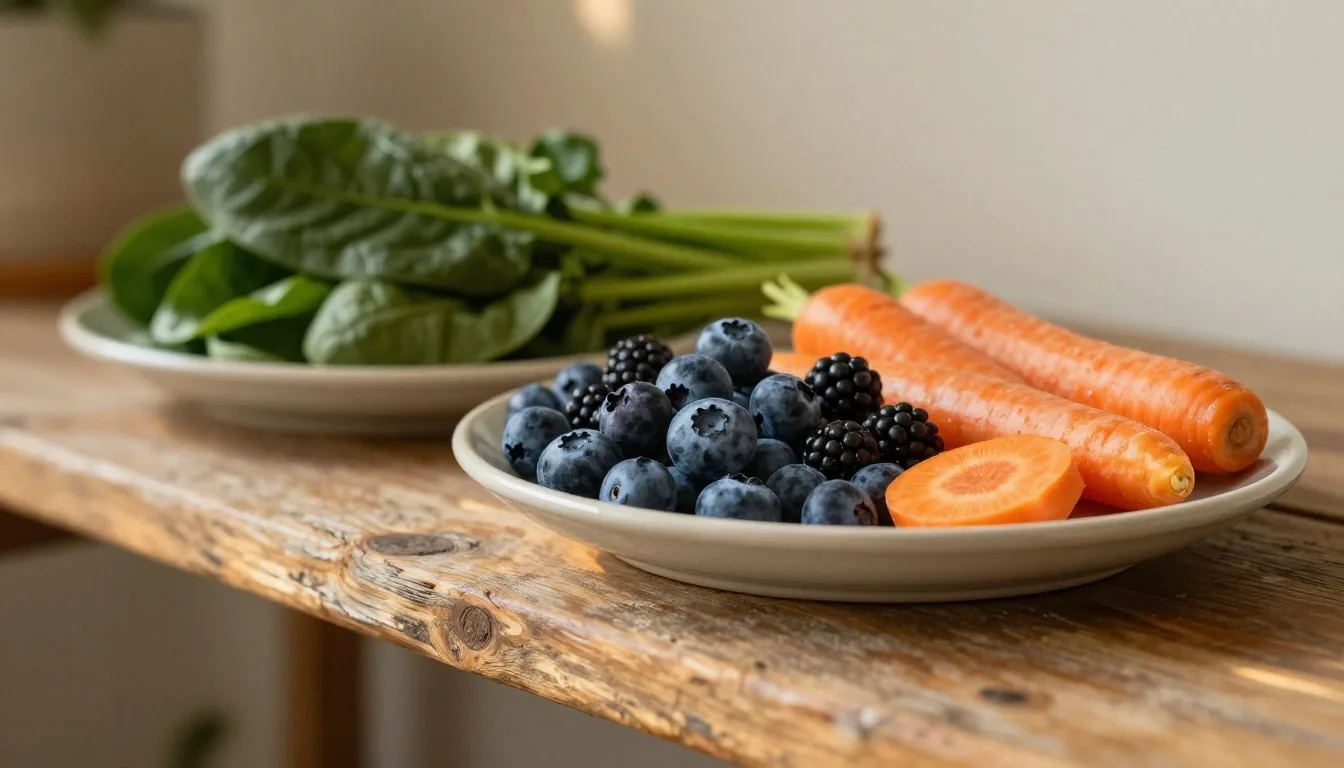
Your eyes use a steady supply of vitamins and pigments from food. Dark berries carry anthocyanins, orange vegetables provide beta-carotene, and leafy greens contribute lutein and zeaxanthin — all compounds that play a role in how your eyes function day to day.
This blog covers which produce contains these nutrients, how much, and what to do with it in the kitchen. We don't offer advice about conditions or prescriptions — just practical food knowledge you can apply at the table.
Anthocyanins
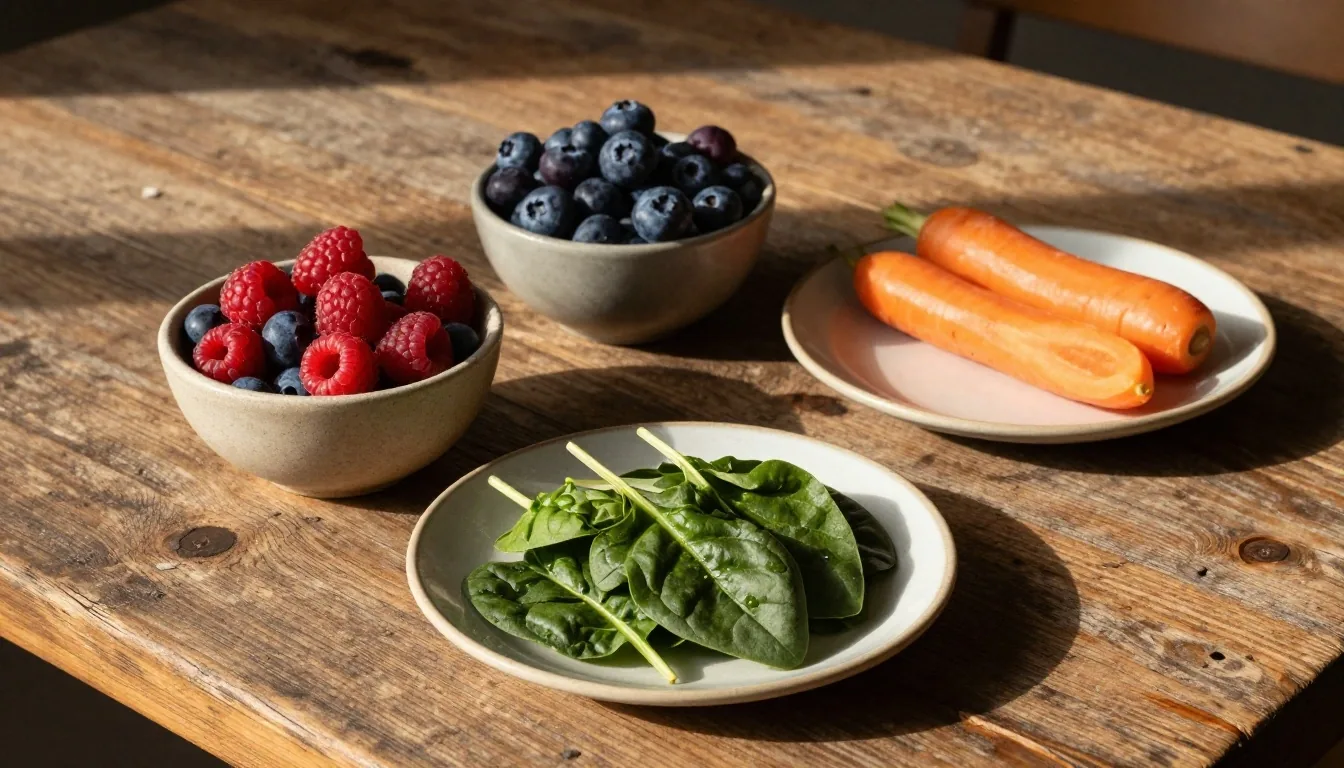
Dark-skinned berries — blueberries, blackberries, gooseberries
Beta-carotene
Orange vegetables — carrots, sweet potatoes, pumpkin
Lutein & zeaxanthin
Leafy greens — spinach, kale, and other dark leaves
Berries worth knowing about
Dark-skinned berries are a central focus of our berries page. Each variety has a distinct nutrient profile — portion notes and storage tips included for South African growing seasons.
Blueberries
Anthocyanin-rich
Known for high anthocyanin content. Sweet-tart, firm skin, good for snacking and breakfast bowls.
Blackberries
Fibre & vitamin C
A good source of fibre and vitamin C. Deeply pigmented, slightly tart — pairs well with yoghurt and porridge.
Gooseberries
Vitamin C load
A sharp vitamin C load in a small serving. Tangy with a papery husk — eaten fresh or made into jams.
Vegetables that support vision
Leafy greens
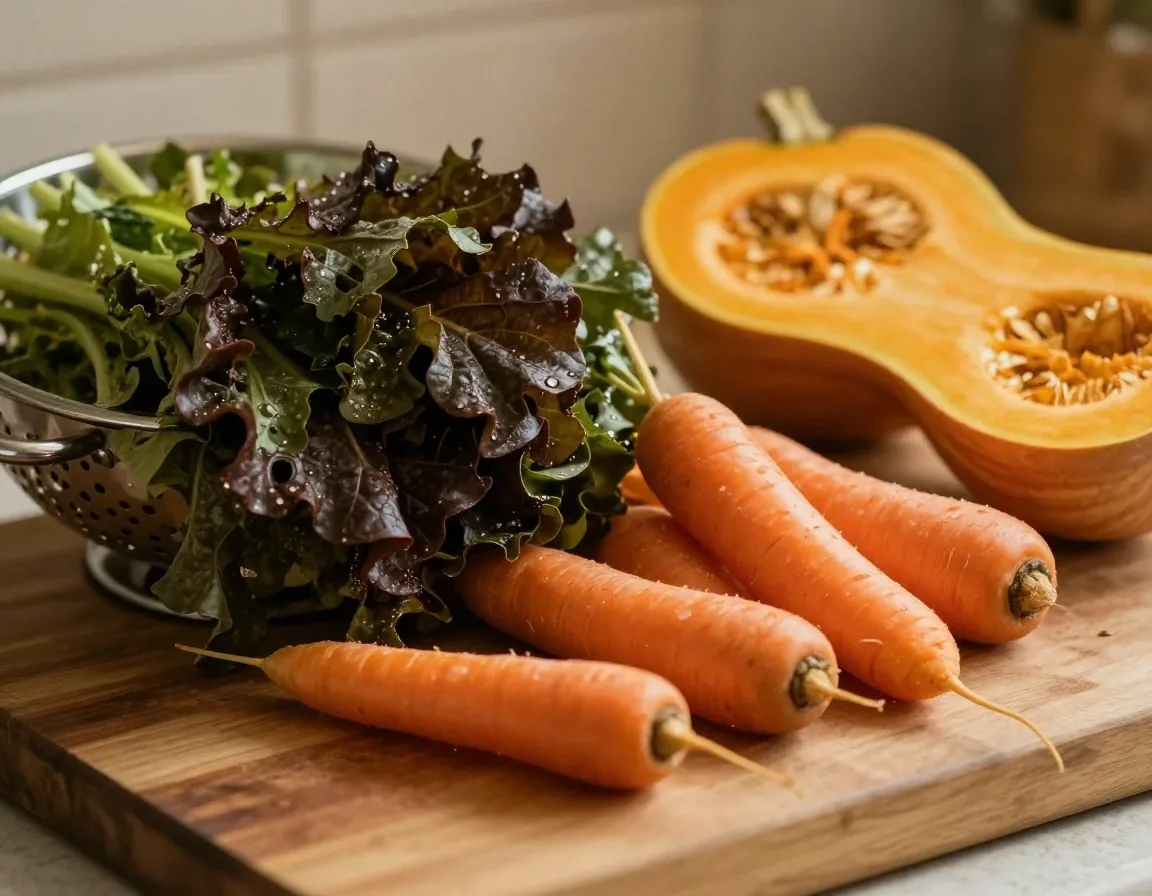
Spinach, kale, and other dark leaves — lutein and zeaxanthin. Light cooking with a fa source helps your body access these nutrients.
Orange vegetables
Carrots, sweet potatoes, pumpkin — beta-carotene. Lightly cooking carrots makes the nutrient more available than eating them raw.
Peppers & tomatoes
Red and yellow peppers, ripe tomatoes — vitamin C content varies with ripeness and cooking time. Eat some raw, roast the rest.
Preparation notes
Pair greens with olive oil or butter; lightly steam rather than boil; keep colours bright and don't overcook.
Leafy greens like spinach and kale, orange vegetables like carrots and sweet potatoes, and other produce like peppers and tomatoes form the backbone of the vegetables page. These items contain varying levels of beta-carotene, lutein, zeaxanthin, and vitamin C.
The page gives preparation methods that help your body access these nutrients — such as lightly cooking carrots and pairing leafy greens with a source of fa. It's practical kitchen guidance, not a prescription.
See vision-supporting vegetables Order fresh produceHow the ordering works
The order page lists fresh berries and vegetables available for delivery or pickup in the Cape Town area. Browse by category, select your items, and choose a fulfilment option. Pay by invoice, bank transfer, or cash on delivery — no online card payment through this site.
Nutrition guides for everyday cooking
Knowing which berries and vegetables are good for your eyes is only useful if you actually eat them. The nutrition guides page offers practical ways to incorporate these items into breakfast, lunch, and dinner without overcomplicating your routine.
- Building a weekly shopping list around eye-friendly produce
- Simple preparation methods that preserve nutrient content
- Storage tips to keep items fresh and reduce waste
- Pairing produce with fats to help your body absorb fat-soluble nutrients
Who this blog is for
This blog is for anyone interested in the connection between produce and eye wellness — a home cook looking for new vegetables, a parent putting more colour on the family plate, or someone who has read about lutein and anthocyanins and wants to know which foods actually contain them.
Our location and local focus
Berry & Veg Vision is based at 42 Loop Street, Cape Town City Centre. Our produce ordering options are built around what is available from growers and suppliers in the Western Cape — so seasonal availability shifts throughout the year, and the ordering page reflects what is currently in stock rather than a fixed catalogue.
What to expect
Produce availability in the Western Cape follows the seasons. Summer brings an abundance of berries, tomatoes, and peppers. Winter shifts to leafy greens and root vegetables. The ordering page reflects these shifts — fresh blueberries won't appear in July, and kale won't be listed in the height of summer.
How we choose what to write about
We focus on produce that is both accessible and nutrient-relevant. If a berry or vegetable has a documented nutrient profile that includes compounds known to support eye function, and it can be grown or sourced in South Africa, it qualifies for a page. We don't write about exotic or unavailable imports just to pad the content — every item on the site is something you can realistically buy and eat.
The connection between reading and ordering
The structure of the site is deliberate. You read about a berry, understand its nutrients, and then have the option to order it from the same place. If you read about kale on the vegetables page and want to try it, the ordering page is one click away with current availability and pricing.
Frequently asked
Can I order produce outside of Cape Town?
The ordering options on this site are built around growers and suppliers in the Western Cape. Delivery is currently limited to the Cape Town area. If you are outside this region, contact us and we can discuss whether a pickup or alternative arrangement is possible.
Do you sell supplements or extracts?
No. Berry & Veg Vision deals only in whole, fresh berries and vegetables. We do not sell supplements, powders, or extracts of any kind. The focus of the blog is on food you can cook and eat.
How often is the ordering page updated?
The ordering page is updated to reflect seasonal availability. This means the list of available items changes throughout the year based on what is currently being grown and harvested in the region.
Is the nutritional information a substitute for professional advice?
No. The information provided here is educational and covers the nutrient content of common berries and vegetables. It is not advice about eye conditions. If you have concerns about your vision, please consult a qualified professional.
Getting in touch
If you have questions about a specific vegetable, want to know more about an ordering option, or are interested in partnering with the blog for content or produce supply, the contact page has all the details.
Berry & Veg Vision · berryandvegvision.info · Cape Town, Western Cape